
Virulence of Mycoplasmas
Peroxides and super-oxides are secreted by parasitic mycoplasmas. Super oxides contain an O2- ion which has a great affinity for oxidation, which causes tissue damage in humans.
Inhibition of catalase: up to 72% in blood cells and up to 80% in nasal, lung and skin cells (Almagor M (1983)). Some Non-virulent strains failed to be as effective,
Pathogenic mycoplasmas adhere to the surface of host cells in an irreversible way, using a hydrophobic mechanism involving the use of cytoskeletal phosphorylated proteins (P1) and electrostatic interactions to bind to the host and remove surface proteins from the afflicted area, respectively. (Kahane I.(1984)). The P1 protein that allows for this is 170 kilodaltons and is a type of adhesin.
Mycoplasmas may contribute as cofactors to the development of AIDS in a long term process.
Peroxides and the function of Catalase
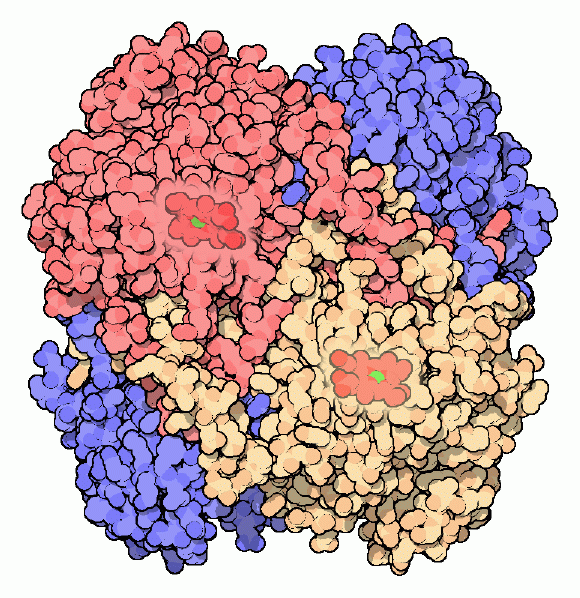
Many cells produce an enzyme called catalase using haem and an iron core as a catalyst ((David Goodsell. (2004).), which breaks down free radical O2- ions in the form of peroxides and super-oxides. The reason being, they are incredibly reactive in the presence of most biological molecules. They can strip protons from macromolecules and even cause DNA damage, increasing the chance of cell death.
Mycoplasmas inhibit catalase in the cells they adhere to, and also introduce free radicals to create a lethal mechanism.

Adhesins
Adhesins are proteins on the outside of bacterial cells that bind to molecules on a target cell, linking the 2 together. They require a specific protein interaction (lock and key mechanism) to function. In Mycoplasmas, the P1 adhesin also acts as an immunosuppressant, allowing the cells to evade detection from the immune system and continue being parasitic. (Aparicio D (2020)).
Development of AIDS
Certain strains of mycoplasma (Mycoplasma genetalium) have been associated with the HIV virus, and contribute to the development of an 'Acquired Immune Deficiency Syndrome'
This happens because the species affects the mucosal area of the genitals, causing an inflammatory response that produces cytokines. HIV susceptible cells are, as a result, recruited to local areas.
When this happens HIV can spread to sub-epithelial cells, through the mucosal layer, where it can further replicate.
(Ruairi Conway.(2019)).

Citations
David Goodsell. (2004). Catalase: Molecule of the Month. Available: 10.2210/rcsb_pdb/mom_2004_9. Last accessed 16/11/2021.
Ruairi Conway, Seamus Cook & Suneeta Soni. (2019). Antibiotic treatment of Mycoplasma genitalium infection. Available: https://pharmaceutical-journal.com/article/ld/antibiotic-treatment-of-mycoplasma-genitalium-infection. Last accessed 16/11/2021.
Aparicio D, Scheffer MP, Marcos-Silva M, Vizarraga D, Sprankel L, Ratera M, Weber MS, Seybert A, Torres-Puig S, Gonzalez-Gonzalez L, Reitz J, Querol E, Pinol J, Pich OQ, Fita I, Frangakis AS.. (2020). Structure and mechanism of the Nap adhesion complex from the human pathogen Mycoplasma genitalium. Available: 10.1038/s41467-020-16511-2. Last accessed 16/11/2021.